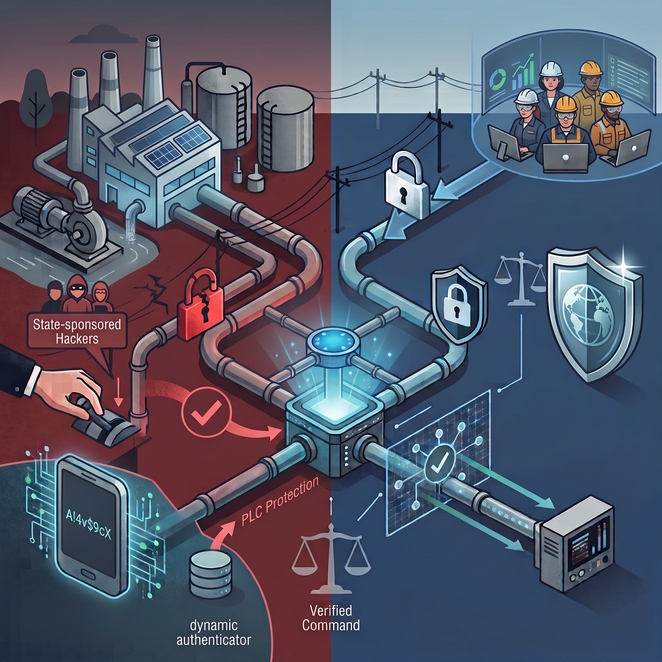
State-sponsored threat actors from Russia, Iran, and China are actively targeting global critical infrastructure, prompting regulatory authorities to drastically heighten legal enforcement. Voluntary security guidelines have evolved into stringent mandates, anchored by US Executive Order 14028, NIST SP 800-82r4 standards, and the EU NIS2 Directive. Under NIS2 enforcement, non-compliance carries severe administrative fines of up to €10 million or 2 per cent of global annual turnover, alongside personal liability for corporate executives. As demonstrated by recent attacks where Iranian-linked CyberAv3ngers breached Colorado water utilities to manipulate PLC pumping cycles and disable alarms, regulators no longer accept boundary-only defences as legitimate compliance.
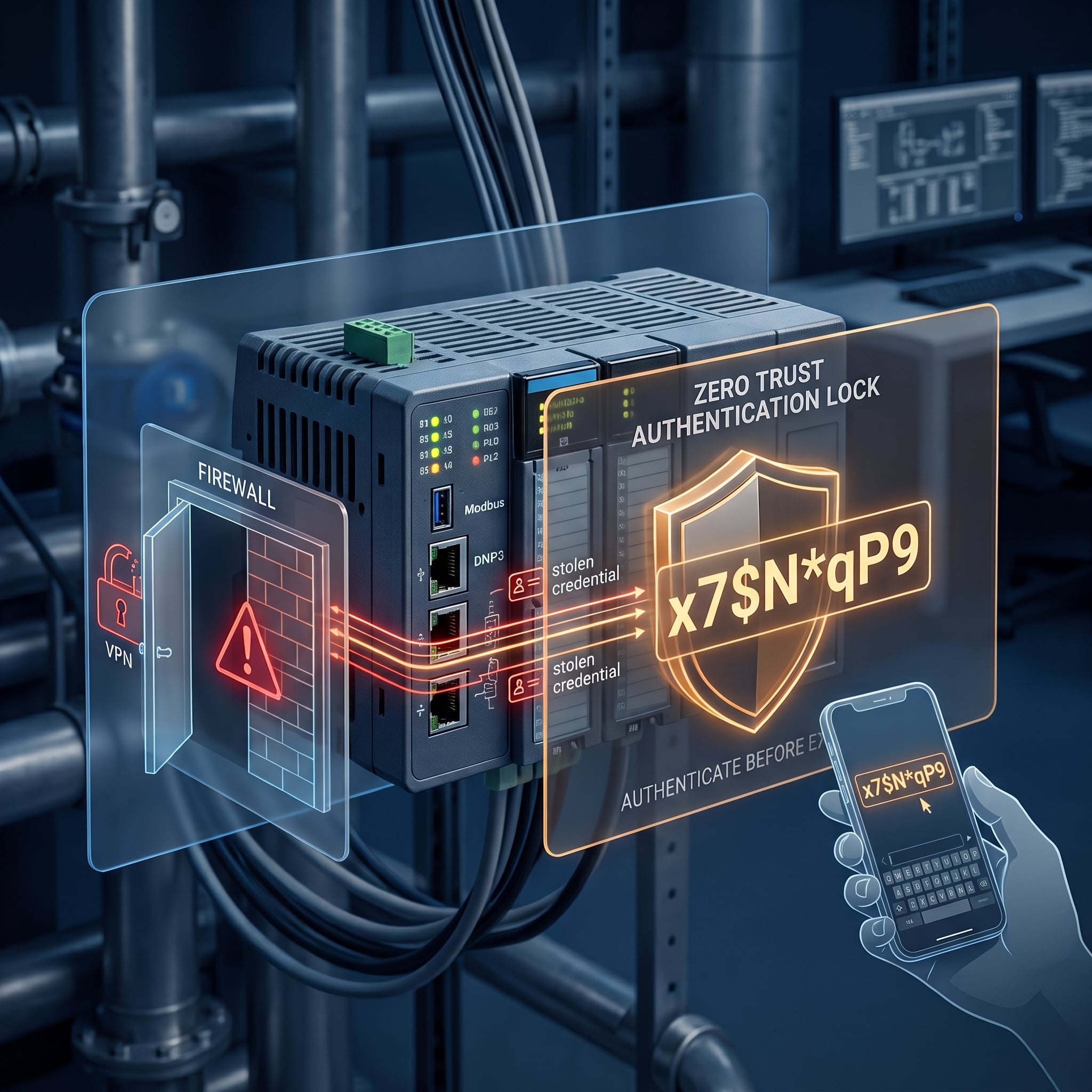
Regulatory bodies are strictly mandating Zero Trust architectures because perimeter-based defences relying on VPNs and firewalls fail against state-sponsored tactics. Rather than deploying complex custom malware, threat actors such as China-linked Volt Typhoon leverage internet-edge router vulnerabilities and compromised credentials to move laterally into OT networks. When an adversary passes through a firewall unimpeded to issue destructive commands directly to Level 1 programmable logic controllers, regulatory auditors classify the incident as a failure of due care and a breach of compliance.
Global compliance standards demanding credential separation and OT command control
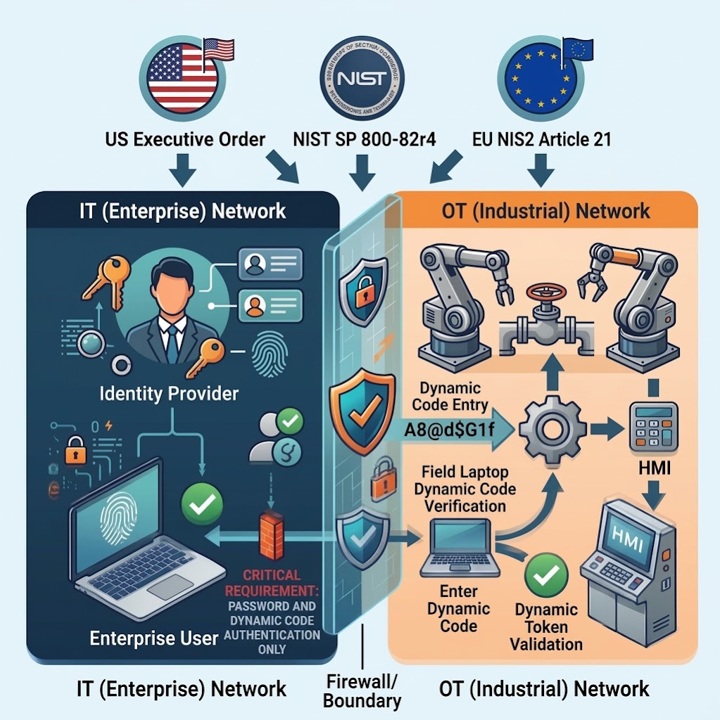
While US Executive Orders, NIST SP 800-82r4 guidelines, and EU NIS2 Article 21 differ in scope, they converge on a central technical mandate: network access authorization must never grant implicit permission to execute control commands. Specifically, NIST SP 800-82r4 explicitly defines Credential Separation as a prerequisite to prevent enterprise IT logins from bypassing OT authentication boundary controls.
Enforcing dynamic identity re-verification directly before a controller acts on an instruction represents the most effective technical path to compliance. By decoupling command execution rights from network tunnel access, organisations effectively block lateral movement using stolen credentials while satisfying stringent Zero Trust identity management requirements across global jurisdictions.
Non intrusive Zero Trust deployment strategy for legacy OT infrastructure
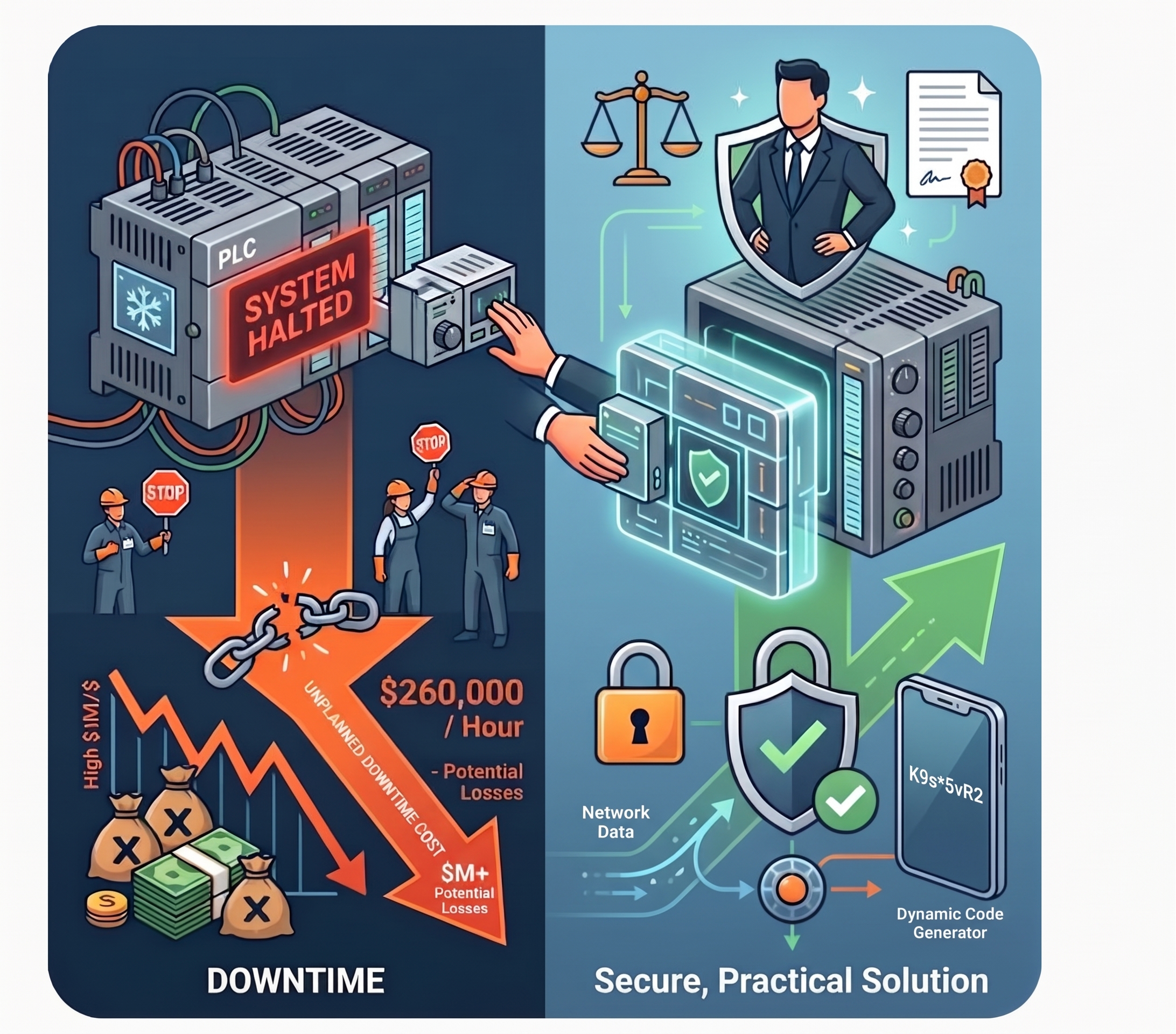
Replacing legacy controllers or modifying source code to achieve compliance introduces unacceptable financial and operational risks. Industry data reveals that unplanned downtime in manufacturing costs an average of $260,000 (approximately £200,000) per hour, with major outages scaling into millions. Attempting a rip-and-replace overhaul jeopardises operational continuity and faces immediate rejection from plant operations teams.
Deploying a lightweight identity verification layer directly in front of legacy endpoints without altering source code provides the most practical resolution. Generating unidirectional dynamic authentication codes without network dependencies satisfies regulatory mandates for credential separation and static password elimination. This non-intrusive approach enables CISOs to establish verifiable Zero Trust enforcement, ensuring full regulatory compliance while completely shielding executive leadership from personal legal liability.
--------------------

swIDch will continue its quest to innovate and pioneer next-generation authentication solutions. To stay up-to-date with the latest trends sign up to our newsletter and check out our latest solutions.