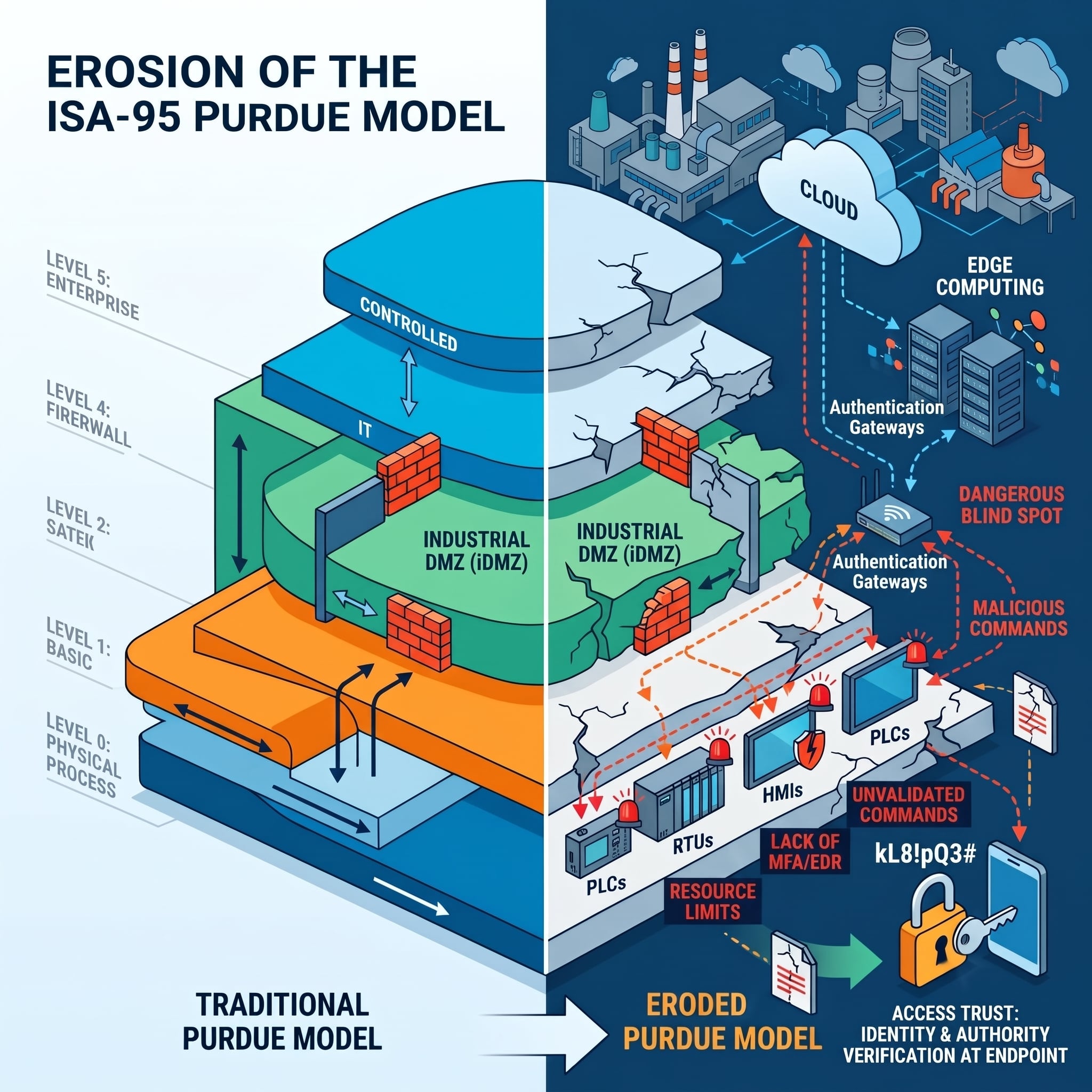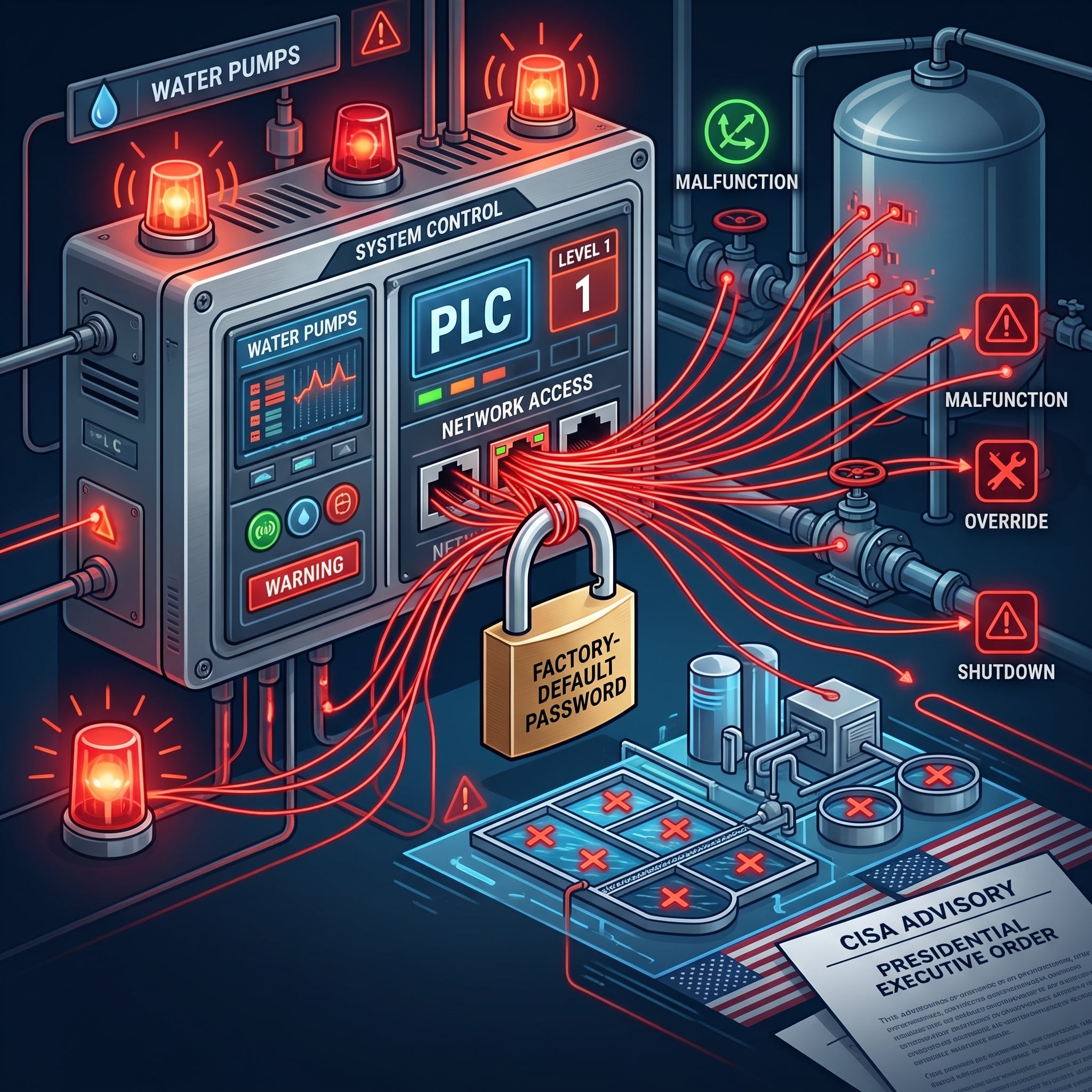
Today countless national infrastructure facilities and smart factories allocate vast annual budgets to tackle escalating cyber threats. They construct multi-layered perimeter defences ranging from next-generation firewalls and deep packet inspection equipment to network traffic analysis solutions and integrated security monitoring systems. However, despite these astronomical investments, a critical defence vacuum remains at the deepest operational layer where physical processes are actually executed. Solutions deployed across the perimeter merely monitor traffic flows, completely failing to verify the true identity of the entity issuing commands right in front of the controllers.
If an attacker breaches the internal network by hijacking authorised credentials or disguising payloads as normal control protocols, top-layer security equipment becomes entirely useless. Ultimately, the end controllers accepting the final commands, such as PLCs or RTUs, execute incoming instructions blindly without distinguishing whether they originate from a legitimate field engineer, a hacker with stolen credentials, or an automated malicious script. No matter how high the perimeter walls are built, infrastructure security cannot be guaranteed if the lock on the final door remains completely unfastened.
Technical constraints of legacy systems and the operational dilemma

Protecting end controllers has proven exceptionally difficult due to the inherent technical constraints of legacy environments. The majority of control equipment used in power plants and manufacturing facilities was designed decades ago, resulting in a severe lack of computing resources such as CPU power and memory. Consequently, running heavy security agents or executing complex multi-factor authentication algorithms commonly used in IT environments is technically impossible.
An even more critical challenge lies in maintaining operational continuity on site. Replacing multi-million pound control systems or halting operations simply to enhance security is an unacceptable choice for plant managers. Modifying controller source code risks triggering minor malfunctions that could paralysing entire production lines, leading to catastrophic financial losses. Ultimately, facility managers have been forced into a compromise where they acknowledge security risks yet leave end controllers completely exposed because they cannot afford to tamper with running machinery.
Technical prerequisites of pre execution control demanded by zero trust
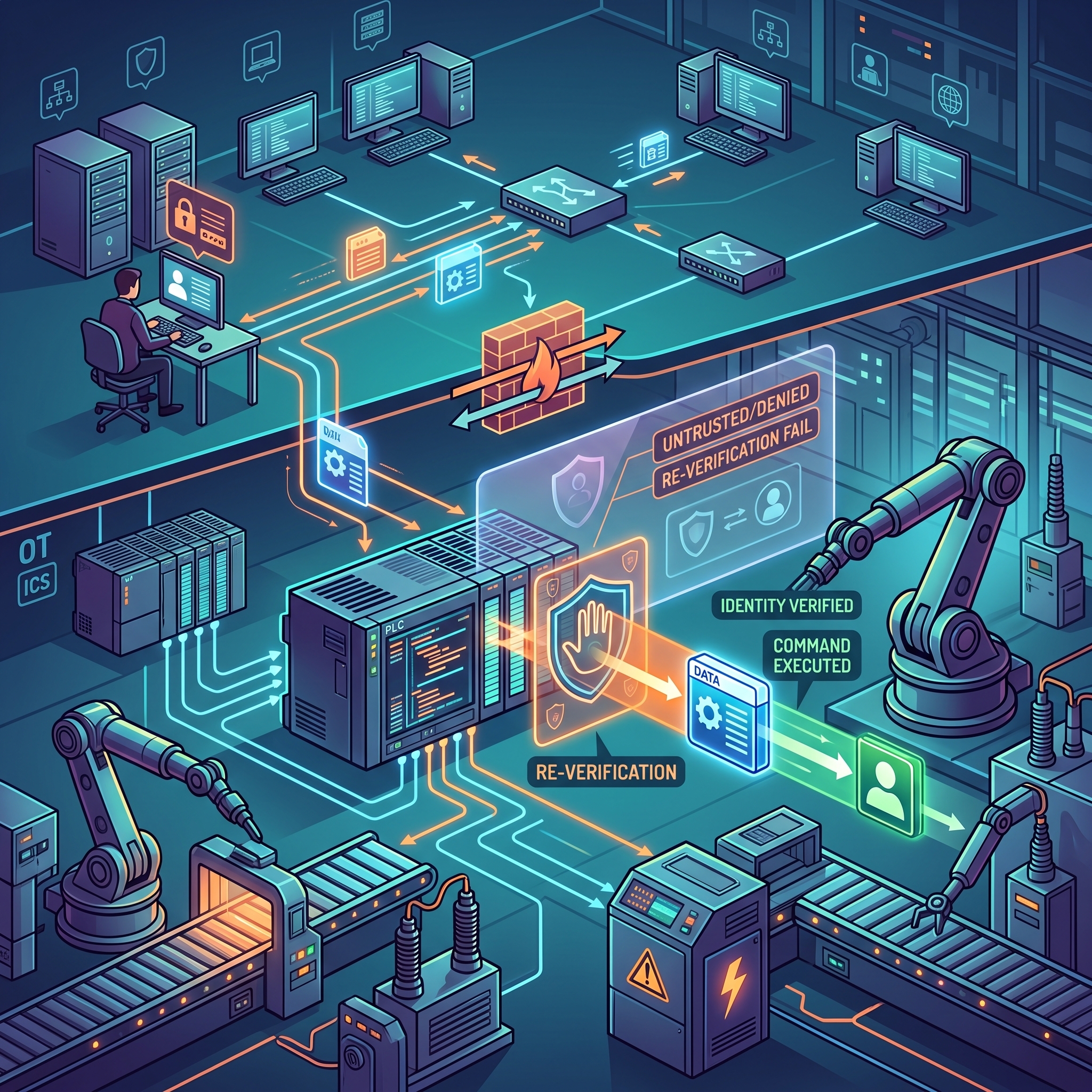
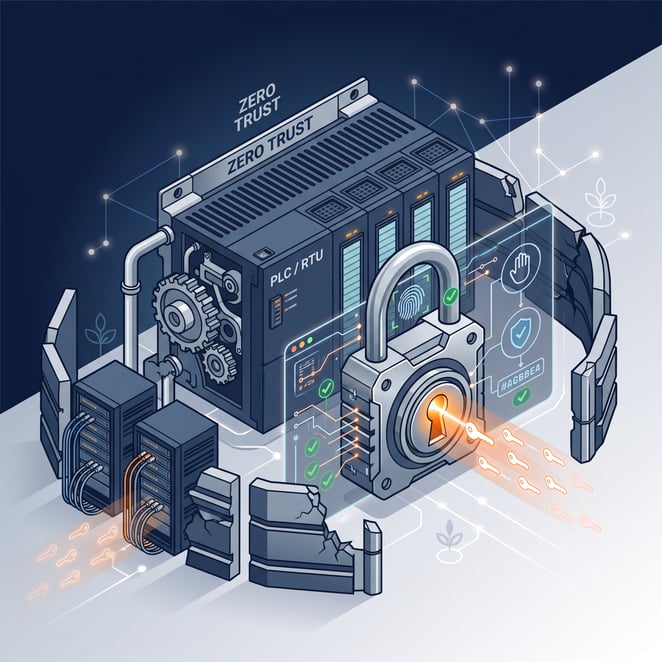
International standard guidelines such as NIST SP 800-82 and IEC 62443 increasingly emphasise a fundamental shift toward zero-trust architectures by acknowledging the inherent limitations of perimeter security. This framework dictates that internal communication passing through network firewalls must never be granted implicit trust, requiring independent re-verification of user privileges immediately before a physical process command is executed.
Addressing the security vacuum at the endpoint requires shifting the identity verification layer from the top of the network down to the immediate front of the controller. Rather than relying on post-breach detection that merely monitors packet syntax or traffic patterns, organisations must integrate an architecture that proactively controls command execution by verifying whether the issuing entity holds legitimate privileges right before physical machinery moves. This approach offers a fundamental defence against threats utilizing stolen credentials.
Building a non intrusive identity verification framework for continuous operations
For a pre-execution control architecture to function effectively in real-world industrial environments, it must satisfy the strict prerequisite of being non-intrusive. This requires a flexible security layer that seamlessly integrates in front of existing endpoints without halting operations or altering source code on legacy controllers.
In particular, combining a one-way dynamic authentication mechanism that prevents replication or brute-force attacks even in offline closed-network environments completely eliminates credential theft risks inherent in static passwords. In industrial environments, a compromise of a single controller can bring down multi-million pound operations. The time has come to stop pouring budgets into passive network monitoring and instead deploy a non-intrusive identity verification framework that places an unbreakable lock directly in front of critical controllers.
--------------------

swIDch will continue its quest to innovate and pioneer next-generation authentication solutions. To stay up-to-date with the latest trends sign up to our newsletter and check out our latest solutions.