%20How%20the%20OT%20Security%20Crisis%20Is%20Creating%20a%20Coverage%20Cliff%20in%20Cyber%20Insurance.png?width=662&height=662&name=(new)%20How%20the%20OT%20Security%20Crisis%20Is%20Creating%20a%20Coverage%20Cliff%20in%20Cyber%20Insurance.png)
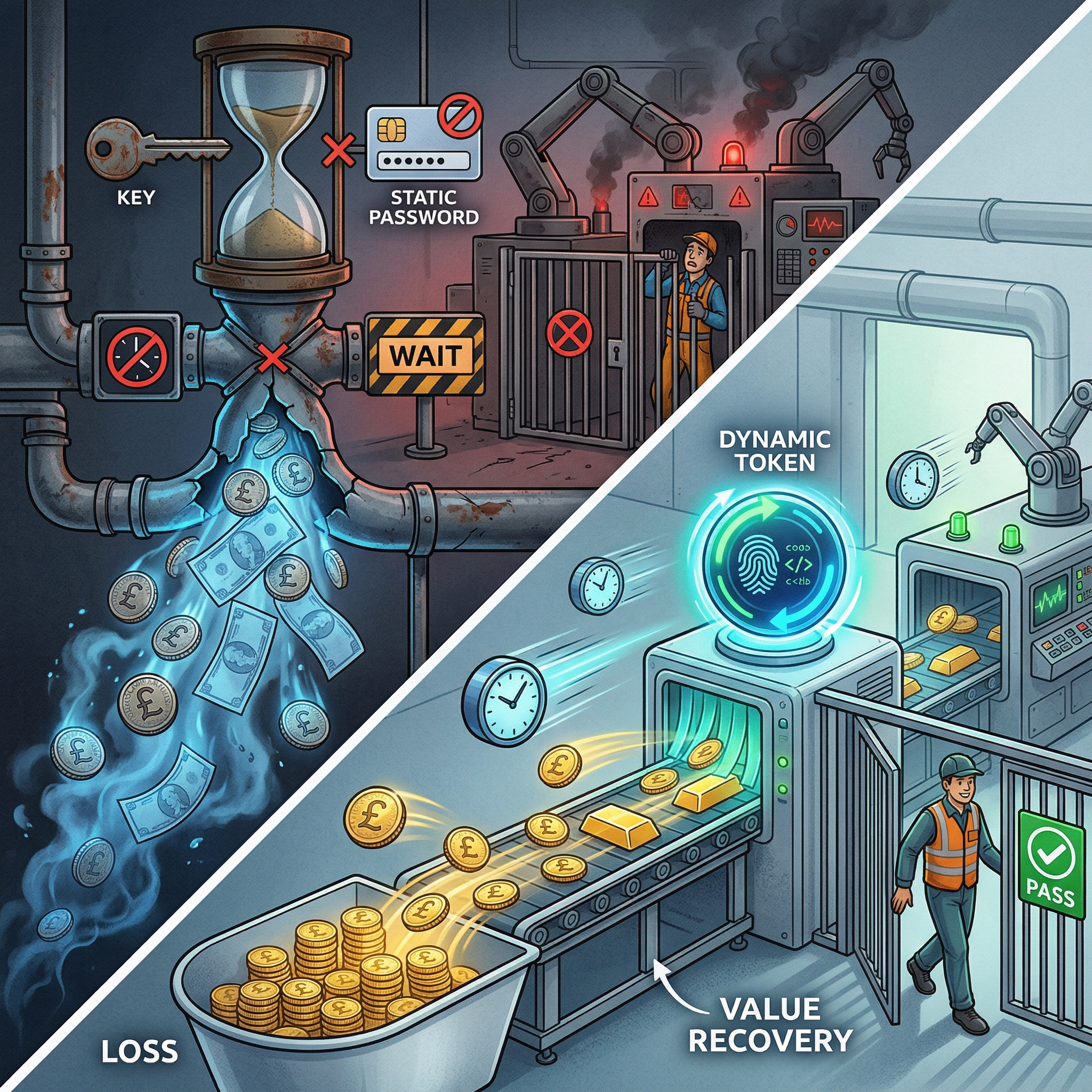
As industrial organisations enter the second quarter of 2026 a fundamental shift in the cyber insurance market has rendered traditional OT security budgets obsolete. Insurance providers are no longer merely asking if a firm has security monitoring in place. Instead they are increasingly scrutinising claims and, in some cases, increasing premiums by 30 per cent or more for firms that continue to rely on static credentials in their Operational Technology environments. For a CFO ignoring the critical vulnerability of static access is no longer a security risk but a direct failure of fiduciary duty in protecting corporate assets.
The financial reality of 2026 is defined by the spiralling costs of remediation that far exceed the immediate cost of downtime. While an unplanned outage costs an average of £80,000 per hour the real fiscal disaster lies in the recovery phase. Recent industrial risk analyses indicate that the total cost of forensic investigation and system restoration after an OT credential based breach has risen to over £3.2 million per incident. If an insurance underwriter restricts or denies coverage due to inadequate access controls this multi million pound burden falls directly onto the balance sheet.
The Failure Of Traditional Multi Factor Authentication Within OT
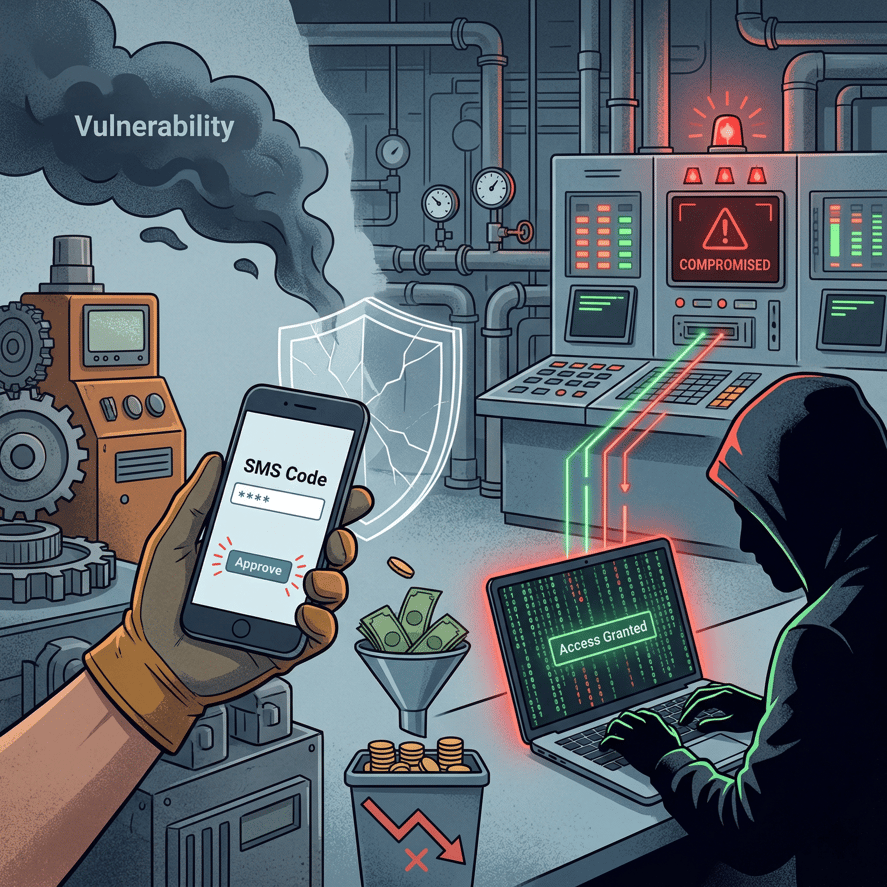
The most dangerous line item in current security budgets is the continued investment in legacy Multi Factor Authentication. The 2026 NIST SP 800-63 guidelines have already classified SMS based MFA as "restricted", while also highlighting the phishing-resistance limitations of legacy MFA methods due to their inherent lack of phishing resistance. In OT environments the failure rate of these methods has reached a critical point as adversary in the middle (AitM) attack kits are now commercially available on the dark web for less than $500.
Investing further in these vulnerable layers is a poor use of capital. These systems create a false sense of compliance while leaving the underlying static password exposed to theft and reuse. When an attacker compromises a third party account the existing security stack treats the intruder as a legitimate user. Relying on a system that cannot distinguish between an authorised engineer and a malicious actor using stolen credentials is not a strategic defence but an expensive administrative overhead.
Maximising Capital Efficiency Through Verifiable OT Access Control
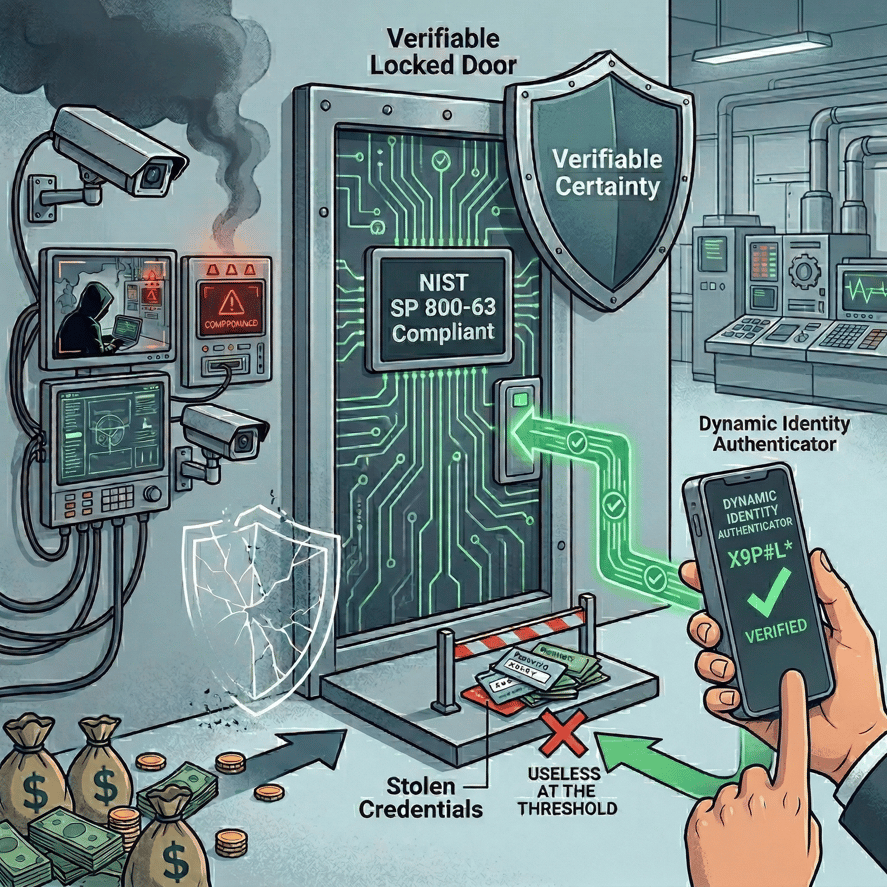
Strategic leaders must prioritise Return on Investment by shifting funds from high cost surveillance to low cost prevention. Major cyber underwriters are placing growing emphasis on verifiable access control as a prerequisite for policy renewal. This is a level of proof that traditional monitoring tools simply cannot provide.
The transition to Dynamic Identity represents the most cost effective pivot in 2026. By ensuring that the authentication process is independent of the network and immune to credential harvesting firms can significantly reduce the probability of a successful credential-based breach. Rather than paying for the high definition recording of an operational collapse firms should invest in a solution that renders every stolen password useless at the threshold. This shift directly addresses insurance requirements while providing a measurable reduction in potential remediation costs. The mandate for industrial leaders is clear. Stop paying for the illusion of safety and start investing in the verifiable certainty of a locked door.
--------------------

swIDch will continue its quest to innovate and pioneer next-generation authentication solutions. To stay up-to-date with the latest trends sign up to our newsletter and check out our latest solutions.