On 22 July 2026, seven US federal agencies—including the FBI and CISA—issued an urgent update to Joint Cybersecurity Advisory AA26-097A. What stands out most in this advisory is what is entirely absent: there is no mention of malicious code (malware) or zero-day vulnerabilities whatsoever.
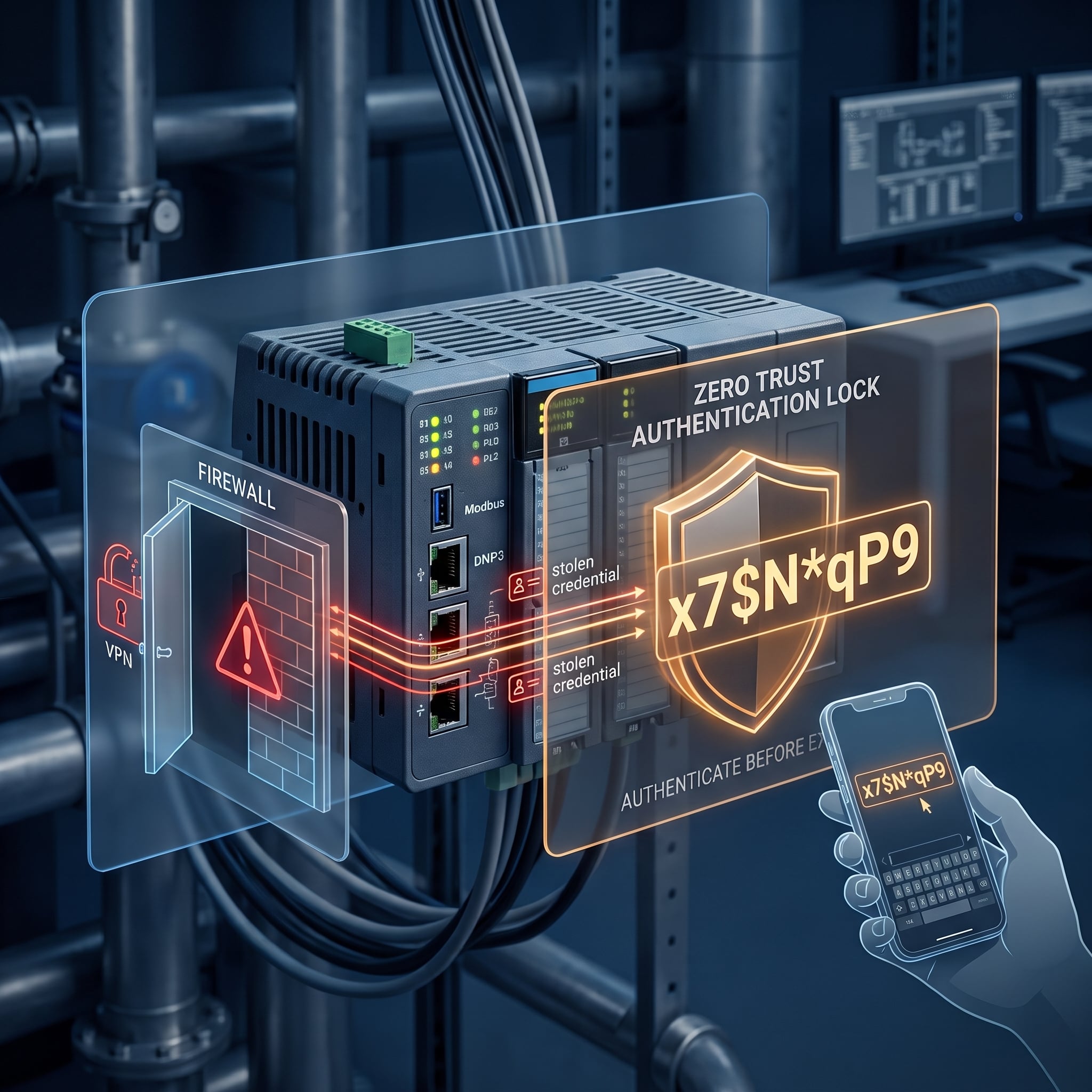
Instead of deploying malware, Iranian-affiliated threat actors gained direct access to industrial control networks by leveraging compromised legitimate credentials alongside vendor-approved engineering software routinely used by technicians worldwide—such as Rockwell Studio 5000, Schneider EcoStruxure, and Siemens TIA Portal. The attackers exfiltrated PLC project files, modified them to selectively disable critical safety shutdown and alarm logic while retaining baseline operational code, and re-uploaded the tampered files. Consequently, HMI and SCADA displays continued to report a 'Normal' status whilst machinery operated under dangerous parameters, resulting in severe operational disruption and financial losses.
Data Contamination vs Outages

This incident carries a stark warning for advanced manufacturing facilities worldwide. The primary imperative of OT cybersecurity is shifting: it is no longer merely about preventing 'downtime'—it is about stopping 'data contamination' at the source.
💡 The Mechanics of Covert Operation and Data Contamination
- Covert Operation: Equipment continues running without interruption, even though safety interlocks and alarm thresholds have been silently neutralised.
- Data Contamination: Manipulated sensor values and compromised control parameters feed into supervisory systems, where they are accepted as authentic operational data.
- AI Pipeline Breakdown: Upstream AI agents and digital twin models ingest this corrupted data, issuing flawed quality-control and operational decisions.
In ultra-precise environments like semiconductor fabrication, an undetected drift in operating conditions is far more damaging than an immediate emergency stop. Silently corrupted production runs force enterprises to scrap weeks of work-in-progress and re-verify entire historical production lines. As manufacturers scale up AI-driven mega-factories and autonomous agents, the speed and blast radius of contaminated data scale exponentially.
Why Legacy OT Security (IPS & Behavioural Detection) Fails
Many industrial enterprises rely on Intrusion Prevention Systems (IPS) or AI-driven anomaly detection. However, these traditional defensive architectures prove ineffective against this specific vector:
- Limitations of IPS (Network Blocking): In an OT environment, automated blocking often translates directly into halting production lines. The high costs associated with false positives make security teams reluctant to enable active inline blocking.
- Limitations of Behavioural Baselines: When a technician connects via standard ports using legitimate, vendor-approved software to update logic, existing detection tools classify the activity as entirely normal.
Ultimately, monitoring "what is happening" (traffic patterns) cannot distinguish between an authorised engineer and an adversary wielding stolen credentials and legitimate tools.
Pre-Execution Unidirectional Identity Authentication

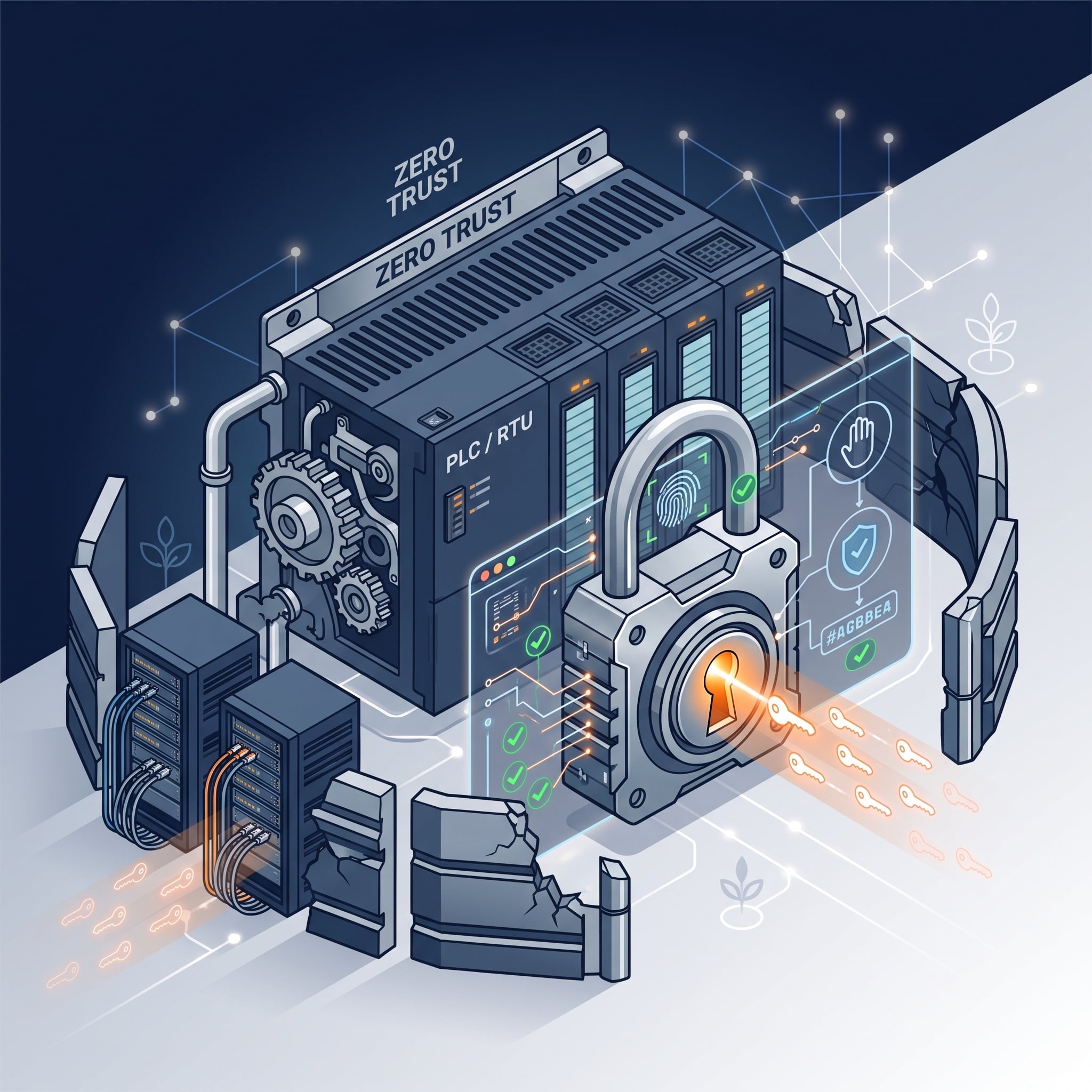
To bridge the gap in detection-centric OT security, organisations must introduce a dedicated control layer that verifies the operator's identity in real time strictly prior to the execution of any PLC logic modification.
International standards such as IEC 62443 explicitly mandate Identification & Authentication (FR1) and Use Control (FR2). To be viable in demanding OT environments, a pre-execution authentication mechanism must meet the following criteria:
- Non-Reusable & Anti-Hijacking: Authentication must rely on dynamic, single-use random values rather than static passwords or simple OTPs.
- Air-Gapped & Unidirectional: It must generate tokens out-of-band without requiring live server communication or time-synchronisation.
- Zero Hardware Disruption: It must integrate into existing input interfaces without requiring agent installation or firmware modifications on legacy PLCs.
- Pre-Execution Enforcement: Authentication must trigger and be verified before the execution of control commands or logic changes, rather than merely during session login.
This aligns directly with Anthropic's research framework, 'Zero Trust for AI agents', which advocates combining hardware-bound credentials with short-lived tokens. Even if credentials are compromised or an engineering workstation is infected, an unauthorised PLC logic change will be blocked immediately without a valid, single-use pre-execution token.
Time to Shift to True Zero Trust
Basic hygiene measures recommended by CISA—such as isolating devices from the public internet, hardening firewalls, and checking project file integrity—remain mandatory baselines. However, as long as legitimate remote maintenance channels remain open, network-level security alone cannot verify whether the entity behind the connection is genuinely authorised.
As attacks disguising themselves behind legitimate tools and valid accounts become standard practice, we must reframe our core security question:
"Is our facility actively verifying the operator's identity right before a PLC control code is modified?"
Enforcing Zero Trust controls at the pre-execution stage is the only way to safeguard industrial AI systems and production lines from data contamination.
📄 References
--------------------

swIDch will continue its quest to innovate and pioneer next-generation authentication solutions. To stay up-to-date with the latest trends sign up to our newsletter and check out our latest solutions.